CASE STUDY
Niagara SPCA + Humane Society
The impact of this engagement is best measured not in impressions alone, but in operational outcomes.
Niagara SPCA provided intake and adoption reporting that allowed us to quantify performance shifts following the implementation of structured communications. Between January and July 2025, prior to full management, the organization recorded 808 adoptions from 1,321 animal intakes, reflecting a 61.2 percent adoption rate. From August 2025 through January 2026, after implementing structured social strategy, storytelling-driven featuring of long-stay animals, email sequencing, and workflow alignment, the organization recorded 910 adoptions from 1,101 intakes — an 82.7 percent adoption rate.
This represents a 21.5 percentage point increase and approximately a 35 percent improvement in adoption efficiency.
Long-stay dogs saw particularly meaningful progress. Of 15 dogs that had been in care since March 2025 or earlier, 14 were adopted within 6 months following consistent featuring and personality-forward storytelling across digital platforms.
Beyond adoption metrics, the organization gained a structured email marketing approach that strengthened supporter continuity, a Wellness Clinic landing page launched in under one week to support public access, defined internal workflows that reduced friction across locations, and cohesive brand standards implemented both digitally and within physical shelter environments.
What emerged was not simply improved engagement, but a communications infrastructure capable of supporting mission delivery in a measurable way.
ENGAGEMENT OVERVIEW
Our partnership with Niagara SPCA & Humane Society extended far beyond social media management. From the outset, the objective was to build a unified communications ecosystem that could support the organization’s mission at scale.
Operating across three shelter locations with fluctuating intake and unpredictable capacity demands, Niagara SPCA required more than increased visibility — it required structure. We approached the engagement holistically, aligning social strategy, email marketing, landing page development, internal workflow systems, and environmental branding into one cohesive framework.
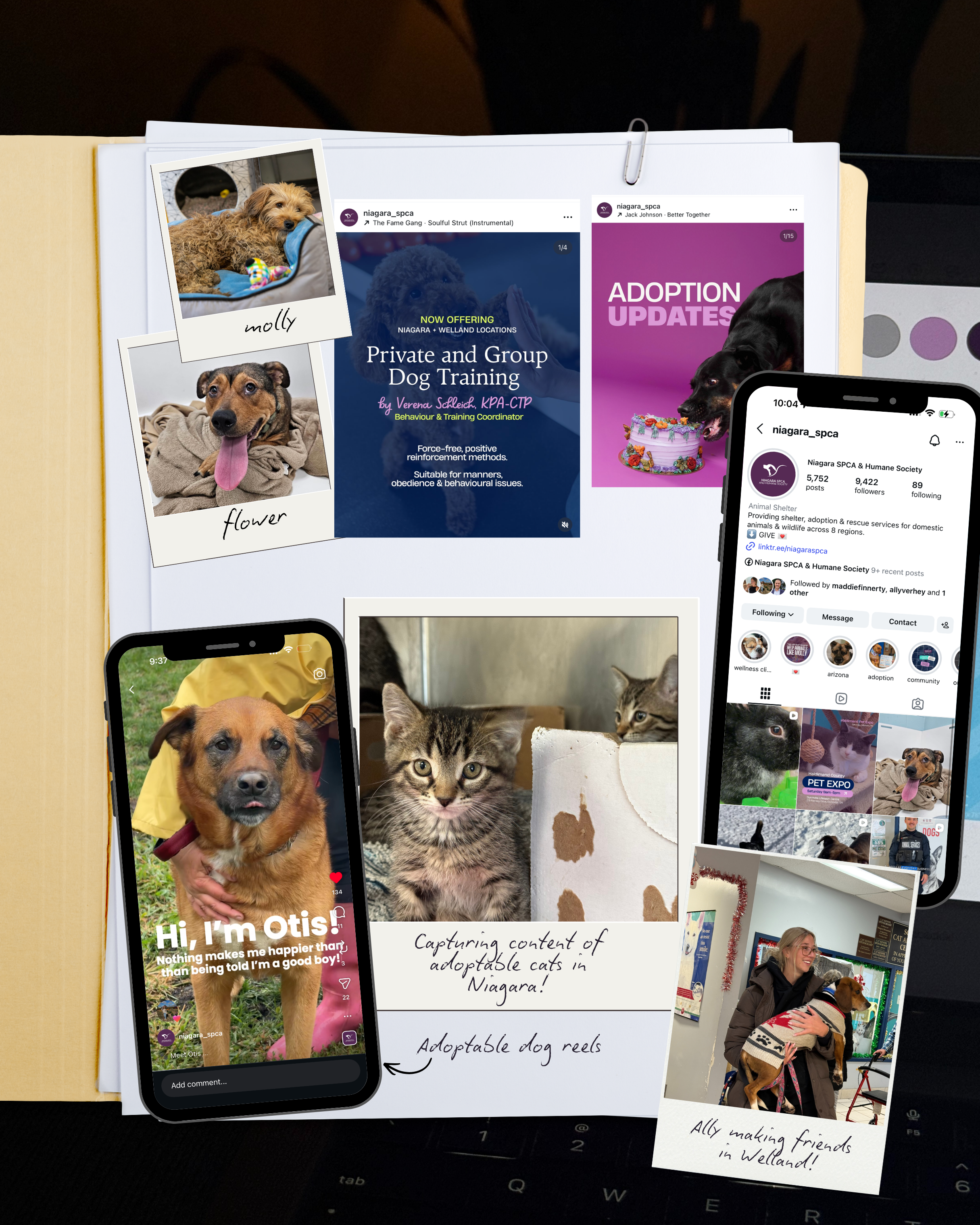
Social media became the primary visibility engine, particularly for adoptable animals and long-stay dogs. Email marketing reinforced continuity, allowing the organization to communicate with depth and narrative consistency. The launch of the Wellness Clinic required rapid yet thoughtful digital infrastructure, ensuring the public could access services with clarity. At the same time, physical signage and environmental branding were aligned with updated digital standards to create a seamless experience between online and in-person interactions.
Rather than treating these channels as separate deliverables, we integrated them into a single communications system designed to reduce internal friction, strengthen public trust, and directly support adoption outcomes.
-
To ensure authenticity, we regularly attended shelter locations to capture adoption-focused short-form video, b-roll, and staff-informed insights. We worked closely with teams to tell stories accurately and responsibly - ensuring each post balanced warmth with clarity.
This approach built trust with both staff and the public.
-
Flexible, expert advice when you need it. Book hourly support across a range of topics—from planning to problem-solving. This focused consultation will help clarify your goals, map out next steps, and identify opportunities for growth.
-
Email became an extension of Niagara SPCA’s mission - not just a donation channel.
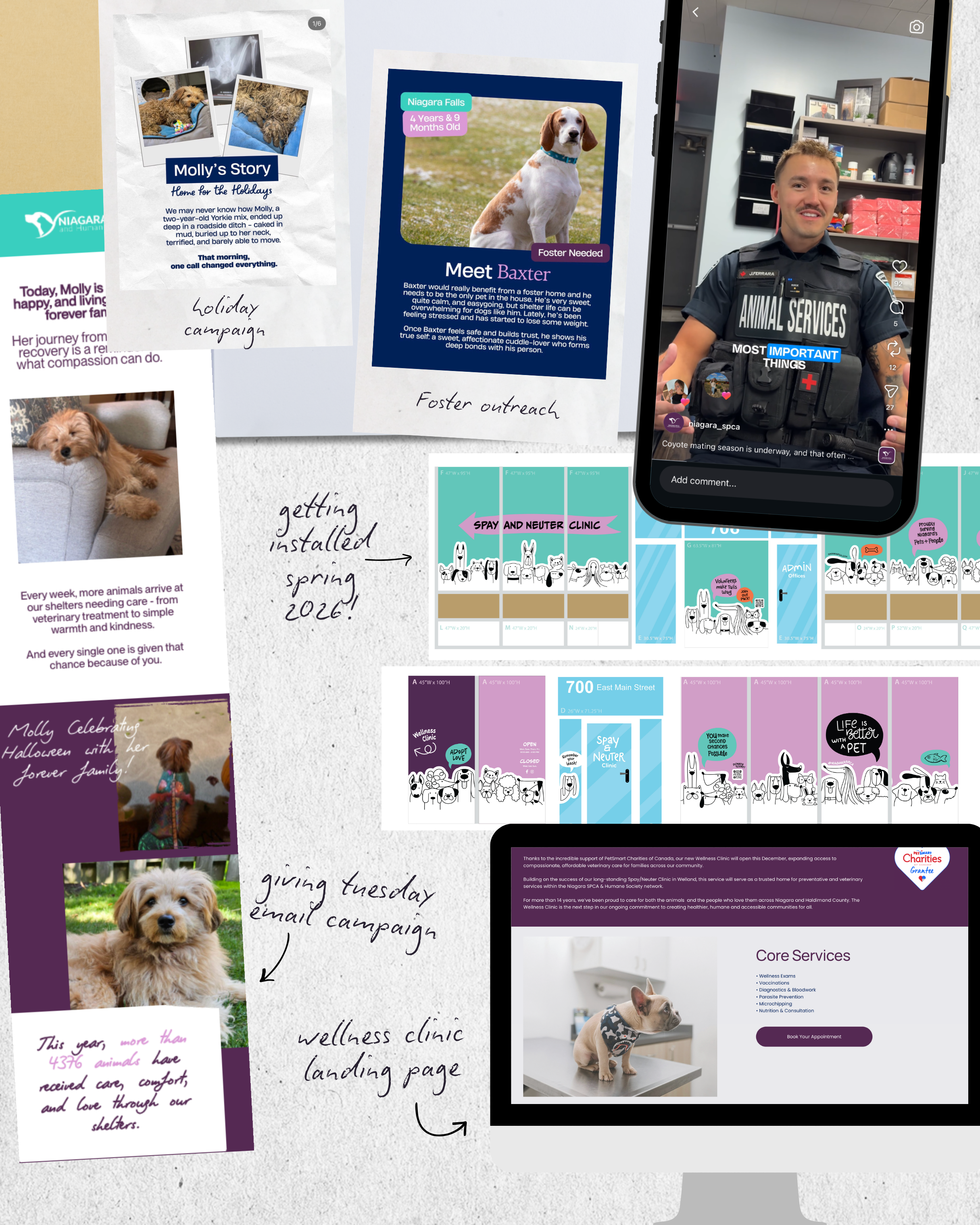
For Giving Tuesday, we developed a structured campaign sequence rather than a single broadcast. Messaging was segmented by audience engagement level and built around storytelling - highlighting real animals, real needs, and measurable impact.
The goal was continuity. What the community saw on social was reinforced in their inbox, creating a cohesive narrative across platforms. By shifting email from reactive announcements to strategic sequencing, we strengthened supporter trust and created a more intentional path from awareness to actio
-
When Niagara SPCA prepared to launch its Wellness Clinic, clarity and speed were critical. We developed and launched a dedicated landing page in under one week.
The page was structured to communicate services, accessibility, and impact without overwhelming visitors. Content was organized for easy navigation, with messaging that balanced professionalism and warmth.
Aligned with newly established brand standards, the landing page extended the organization’s digital ecosystem while supporting immediate operational goals.
-
To ensure brand cohesion beyond digital platforms, we developed signage and window coverings for clinic and office spaces.
Fonts, colours, and messaging were aligned with updated brand standards introduced across social and internal assets. This created a seamless experience - whether someone encountered Niagara SPCA online or in person. By extending brand identity into physical environments, we reinforced credibility, clarity, and trust at every touchpoint.
THE IMPACT